How to bridge from child chain to parent chain
This guide explains how to programmatically send messages and withdraw assets from an Arbitrum child chain to a parent chain (such as Ethereum). For conceptual information about the messaging protocol, see Child-to-parent chain messaging.
Prerequisites
- A child chain wallet with funds
- Access to parent chain infrastructure (for executing the final step)
- Awareness that child-to-parent messages require 6.4 days to finalize
Overview of the process
Child-to-parent chain messaging follows these steps:
- Send message on child chain: Call
ArbSys.sendTxToL1to initiate the message - Wait for finalization: The message enters a 6.4-day Challenge Period
- Execute on parent chain: After finalization, call
Outbox.executeTransactionto complete the transfer
Sending a message from the child to the parent chain
To send a message from the child chain to the parent chain, use the ArbSys precompile's sendTxToL1 method:
function sendTxToL1(
    address destination,
    bytes calldata data
) external payable returns (uint256)
Parameters
destination: The parent chain address that will receive the messagedata: Calldata to send to the destination address on the parent chain
Return value
Returns a unique identifier for the message, used to track its status and construct the outbox proof for execution.
The ArbSys precompile is located at address 0x0000000000000000000000000000000000000064.
Example: Sending a simple message
const arbSys = new ethers.Contract('0x0000000000000000000000000000000000000064', arbSysABI, childChainSigner);

const tx = await arbSys.sendTxToL1(parentChainDestination, ethers.utils.toUtf8Bytes('Hello from L2!'));
const receipt = await tx.wait();
Executing the message on the parent chain
After the 6.4-day challenge period, you can execute the message on the parent chain.
Step 1: Retrieve proof data
Use the NodeInterface contract to get the Merkle proof:
function constructOutboxProof(
    uint64 size,
    uint64 leaf
) external view returns (
    bytes32[] memory proof,
    uint256 path,
    address l2Sender,
    address l1Dest,
    uint256 l2Block,
    uint256 l1Block,
    uint256 timestamp,
    uint256 amount,
    bytes memory calldataForL1
)
Parameters:
size: The batch number containing your messageleaf: The index of your message within the batch (0-indexed)
Example usage:
const nodeInterface = new ethers.Contract('0x00000000000000000000000000000000000000C8', nodeInterfaceABI, childChainProvider);

const proofData = await nodeInterface.constructOutboxProof(batchNumber, indexInBatch);
NodeInterface is a "virtual" contract accessible at 0x00000000000000000000000000000000000000C8. It isn't a true precompile but provides Arbitrum-specific data without requiring a custom RPC.
Step 2: Execute on the parent chain
Call Outbox.executeTransaction with the proof data from Step 1:
function executeTransaction(
    bytes32[] calldata proof,
    uint256 path,
    address l2Sender,
    address l1Dest,
    uint256 l2Block,
    uint256 l1Block,
    uint256 timestamp,
    uint256 amount,
    bytes calldata calldataForL1
) external
All parameters come from the constructOutboxProof call. The method executes the message at the l1Dest address with the provided calldata and amount.
Example usage:
const outbox = new ethers.Contract(outboxAddress, outboxABI, parentChainSigner);

const tx = await outbox.executeTransaction(proofData.proof, proofData.path, proofData.l2Sender, proofData.l1Dest, proofData.l2Block, proofData.l1Block, proofData.timestamp, proofData.amount, proofData.calldataForL1);
await tx.wait();
Withdrawing ETH
To withdraw ETH from the child chain, use the ArbSys precompile's withdrawEth method:
function withdrawEth(
    address destination
) external payable returns (uint256)
Parameters
destination: The parent chain address that will receive the ETH- Value (
msg.value): The amount of ETH to withdraw from the child chain
Return value
Returns a unique identifier for the withdrawal message.
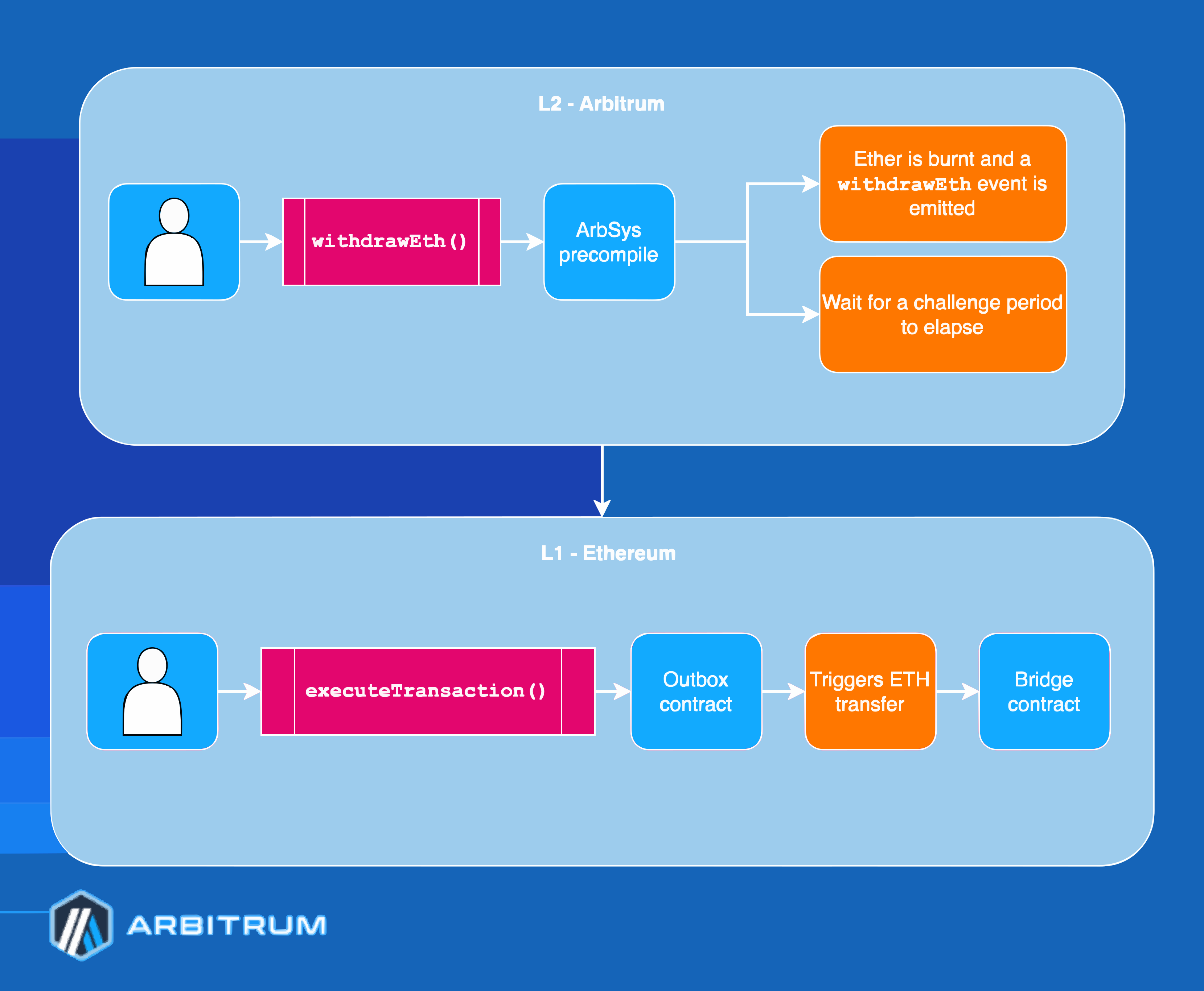
How ETH withdrawal works
- On the child chain: The ETH balance is burned, and a message is created
- Challenge period: Wait 6.4 days for the assertion to finalize
- On the parent chain: Execute via
Outbox.executeTransactionto claim your ETH
ArbSys.withdrawEth is equivalent to calling ArbSys.sendTxToL1 with an empty calldata argument. Like any child-to-parent message, it requires executing on the parent chain after the dispute period.
Example: withdrawing ETH
const arbSys = new ethers.Contract('0x0000000000000000000000000000000000000064', arbSysABI, childChainSigner);

// Withdraw 0.1 ETH
const tx = await arbSys.withdrawEth(parentChainAddress, {
  value: ethers.utils.parseEther('0.1'),
});
const receipt = await tx.wait();

// After 6.4 days, execute on parent chain using the steps above
The withdrawal process:
Withdrawing ERC-20 tokens
For ERC-20 token withdrawals, see the dedicated Withdraw tokens guide, which provides detailed instructions for using Arbitrum's canonical token bridge.
Using the Arbitrum SDK
The Arbitrum SDK simplifies child-to-parent messaging:
import { L2ToL1MessageStatus, L2TransactionReceipt } from '@arbitrum/sdk';

// Get the L2 transaction receipt
const l2Receipt = await childChainProvider.getTransactionReceipt(l2TxHash);
const l2TxReceipt = new L2TransactionReceipt(l2Receipt);

// Get L2ToL1 messages from the transaction
const messages = await l2TxReceipt.getL2ToL1Messages(parentChainSigner);

// Wait for the message to be executable
const message = messages[0];
await message.waitUntilReadyToExecute(childChainProvider);

// Execute the message on the parent chain
const executeResult = await message.execute(childChainProvider);
await executeResult.wait();
Message lifecycle
Child-to-parent messages go through these stages:
| Stage | Description |
|---|---|
| Posted on child chain | The message is sent via ArbSys.sendTxToL1 |
| Waiting for finalization | The assertion containing the message is in the challenge period (6.4 days) |
| Confirmed and executable on parent chain | The assertion is confirmed, and the message can be executed in the outbox |
Next steps
- For protocol-level details, see Child to parent chain messaging
- For token bridging concepts, see Token bridging overview
- For the Arbitrum SDK documentation, see SDK reference